Author Archives: Rosa Kutz

NIS Niraparib – NOGGO-ov45 – CAROLIN

NIS Niraparib - NOGGO-ov45 - CAROLIN

For patients with platinum-sensitive ovarian cancer who have no contraindications to niraparib

This non-interventional observational study aims to investigate the long-term treatment with niraparib in patients with platinum-sensitive ovarian cancer who have been diagnosed for the first time or have already suffered a relapse (recurrence) and to identify factors associated with long-term survival. Niraparib is a so-called PARP inhibitor that prolongs the effect of chemotherapy after its completion by suppressing the repair mechanisms in the cancer cells damaged by the chemotherapy. The damaged cells are then unable to regenerate and die.

What is the aim of the study?

The aim is to find out which typical features/characteristics with regard to the disease, therapy and patients are associated with long-term survival. The study will also investigate which treatment-specific factors of niraparib administration (dose, side effects, duration of therapy, quality of life during therapy) correlate with long-term survival.

What is the procedure for the study?

This is an observational study in which the decision to treat with niraparib was made by the doctor and patient before the start of the study and the therapy is carried out according to the standard regimen. Patient data is collected at the beginning of the study and every six months thereafter, for up to eight years after study inclusion.

Are there any risks?

This is a purely observational study, i.e. the patients do not receive any additional medication or other treatment regimes. In this respect, the study participants are not exposed to any additional risks or side effects. However, treatment with niraparib, which is prescribed to patients with ovarian cancer after chemotherapy in the relapse situation, can have side effects, e.g. lead to a lack of blood platelets, a lack of certain white blood cells (neutrophil granulocytes), anemia, high blood pressure or fatique syndrome.

Participation requirements

Women aged 18 and over with ovarian, fallopian tube or peritoneal cancer who have been diagnosed for the first time or have relapsed (confirmed by histological findings) and who have achieved a tumor response with chemotherapy can take part in this study. Patients must be suitable for maintenance therapy with niraparib, i.e. they must have no contraindications and be able to take oral medication independently and reliably. Patients who are hypersensitive to the preparation, pregnant or breastfeeding may not take part in the study.

Where can I take part in the study?

This study is supported by:

The research-based pharmaceutical company GLAXOSMITHKLINE is a partner in this study.
EXPRESSION IX (9)

NOGGO S20 / ENGOTgyn4 - EXPRESSION IX (9)

Long-term survival with gynecological cancer / Langzeitüberlebende mit gynäkologischen Krebserrankungen

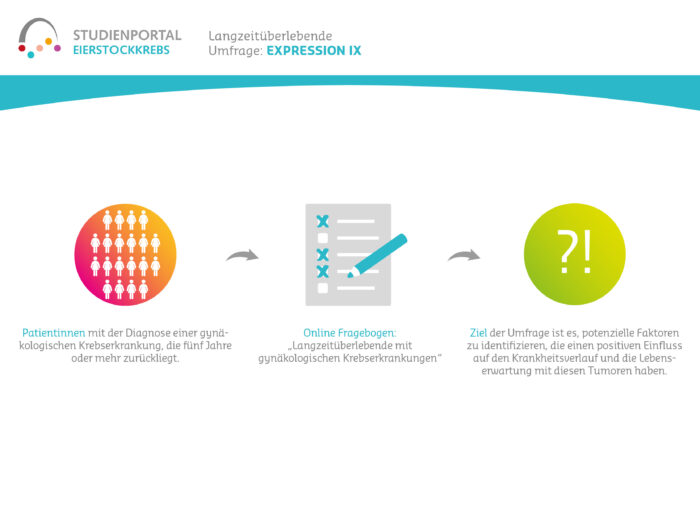
Based on the experience with Expression VI – Carolin meets HANNA, a survey focused on long-term survivors with ovarian cancer, we would like to conduct the same survey with slightly modified questions with survivors of other gynecologic cancers.

What is the aim of the survey?

With the “Expression IX” survey, we want to expand the patient collective of long-term survivors and now want to include long-term survival with all gynecological tumors. As part of the study, we want to survey patients worldwide with cervical carcinoma, endometrial carcinoma and other rare gynecological tumors (e.g. gynecological sarcomas in the uterus or germline tumors) using an anonymized questionnaire and via the Internet. The aim of the survey is to identify potential factors that have a positive influence on the course of the disease and life expectancy with these tumors.

What is the survey process?

You will receive various questionnaires to complete. By completing the questionnaire or answering the questions, you agree to participate in the survey and that you are fully informed about this survey and understand the objectives of this survey. We have deliberately limited the number of questions to keep the effort for you as low as possible. To participate in this survey, we do not require any information such as your name, address or date of birth. The survey is anonymous. Completing the questionnaire will take approximately 1 hour of your time. Please return the completed questionnaire to the person who sent you the survey or send it to the address given in the questionnaire. It is also possible to participate via the link below.

Are there any risks?

No, it’s a survey.

Participation requirements

Women aged 18 and over can take part in this study:

  • with a diagnosis of gynecological cancer dating back five years or more

Where can I take part in the study?

You can take part in the survey via this link or via the participating centers.

NOGGO S19 – EXPRESSION VIII (8)

NOGGO S19 - EXPRESSION VIII (8)

For patients with a low-grade ovarian carcinoma (group A) or a borderline tumor of the ovary (group B – closed).

Serous ovarian carcinoma is classified into a well-differentiated (low-grade) tumor and a low-differentiated (high-grade) tumor. The low-grade tumor accounts for only about 10% of ovarian carcinomas and is associated with a better prognosis compared to the high-grade tumor. Despite the good prognosis, there is a great need for information for and about this patient group.

Expression-8-Ovar A

What is the aim of this survey?

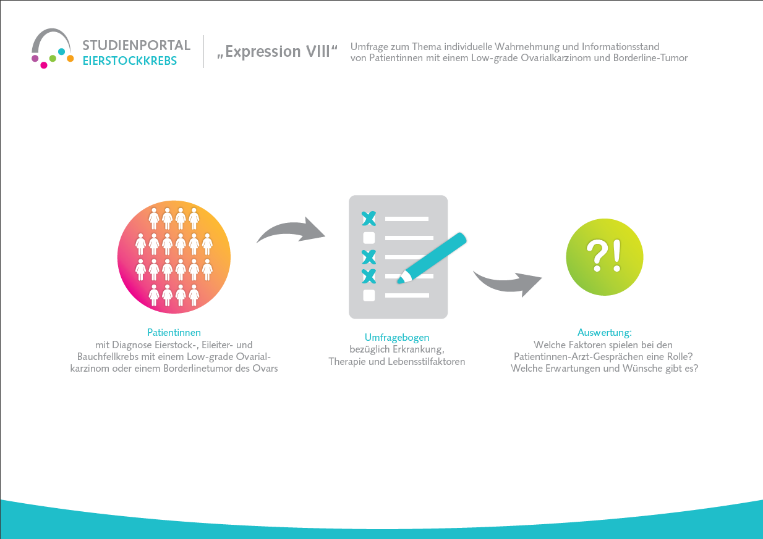
As part of the survey “EXPRESSION VIII – Individual perception and level of information of patients with low-grade ovarian cancer or a borderline tumor of the ovary”, we would like to learn from you in order to improve patient education about the disease and therapy and thus increase the level of information of patients.

How exactly does the survey work?

You will receive various paper questionnaires to complete. By completing the questionnaire or answering the questions, you agree to take part in the survey and confirm that you are fully informed about the survey and understand its objectives. We have deliberately limited the number of questions in order to keep the effort for you as low as possible. We do not require your name, address or date of birth to participate. The survey is anonymous. Completing the questionnaire will take about 20-30 minutes of your time. Please return the completed questionnaire to the person who gave you the survey or send it back to the address given in the questionnaire.

Are there any risks?

No, this is a survey.

Participation requirements

Women aged 18 and over can take part in this study.

    • Women aged 18 and over can take part in this study.
    • Patients with low-grade serous tubal, peritoneal or ovarian cancer.
    • Initial treatment, recurrences possible.

Group B for patients with a borderline tumor of the ovary is closed, as numerous patients have already taken part in the survey. We look forward to the upcoming study results!

Where can I participate in the study?

Patients can take part via the participating centers. It is not possible to answer the questions in this survey via the Internet.

EXPRESSION VI (6)

NOGGO S13 / ENGOT-ov40 - EXPRESSION VI (6)
CAROLIN MEETS HANNA

For patients with ovarian, fallopian tube and peritoneal cancer who were diagnosed at least 5 years ago

NEW: Instead of the previously required period of eight years after initial diagnosis, we would now like to invite all long-term survivors of at least five years after initial diagnosis to take part in this survey.

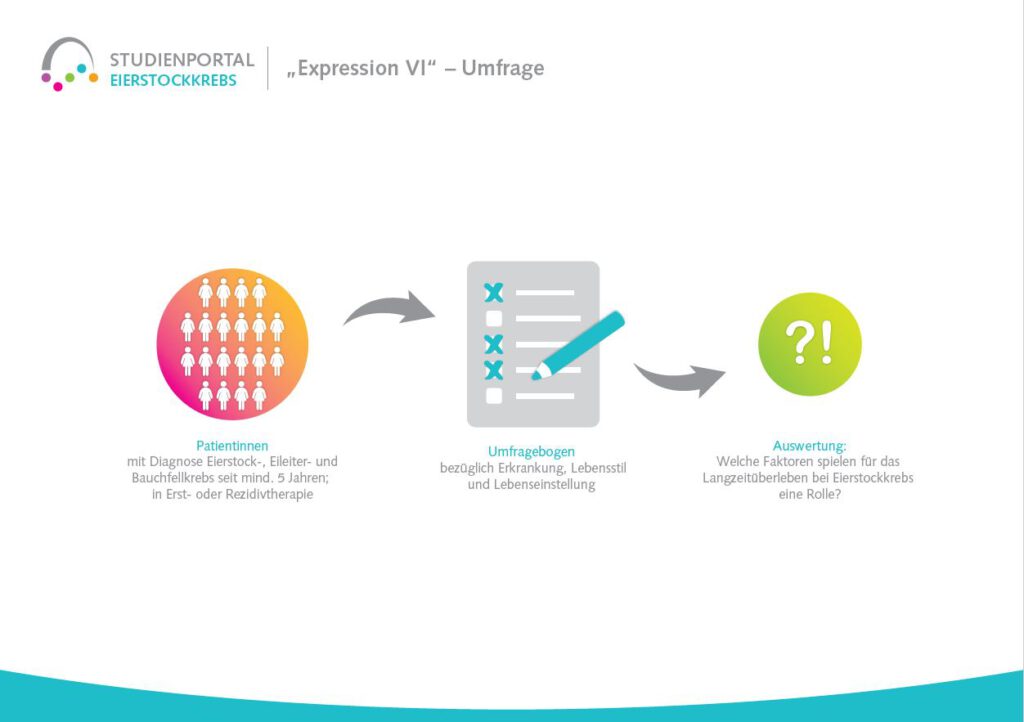
Ovarian, fallopian tube and peritoneal cancer is a very serious tumor disease. Many women often die from it in the first few years. You have been successfully fighting ovarian cancer for more than five years now. Unfortunately, most patients have a much worse course of the disease than you. Patients who were diagnosed more than 5 years ago are called “long-term survivors”. As very little research has been carried out on these patients to date, the survey sheds light on what makes this rare patient group special. So far, there is only speculation as to what the different courses of the disease might be due to.

What are the particularities of life and lifestyle that have made women live with ovarian cancer for so many years? For example, non-smoking, a balanced diet and immunological factors are discussed. The study examines lifestyle, living conditions, psychological factors and social conditions.

What is the aim of the survey?

We would like to learn from you as part of this survey “Expression VI – Long-term survival with ovarian cancer” – with the aim of giving you direct feedback and being able to make better recommendations to other patients regarding modifiable factors such as diet and exercise.

What is the survey procedure?

By completing the questionnaire or answering the questions, you agree to participate in the survey and that you are fully informed about this survey and understand the objectives of this survey. We have deliberately limited the number of questions in order to keep the effort for you as low as possible. To participate in this survey, we do not require any information such as your name, address or date of birth. The survey is anonymous. Filling out the questionnaire will take about 20-30 minutes of your time. Please return the completed questionnaire to the person who gave you the survey or send it to the address below.

Are there any risks?

No, it’s a survey.

Participation requirements

Women aged 18 and over can take part in this study:

  • Patients who were born at least were diagnosed with ovarian cancer at the age of 5
  • Initial treatment, recurrences possible

Where can I take part in the studies?

You can take part in the survey under this link.

ENGOT-ov83 / CATALINA-2

ENGOT-ov83 / CATALINA-2

Therapeutic study to evaluate the efficacy and safety of the new compound TORL-1-23 in patients with advanced, platinum-resistant ovarian cancer

CATALINA-2 is an international phase 2 trial investigating a new, targeted drug called TORL-1-23 in women with advanced, platinum-resistant ovarian cancer (ovary, fallopian tube or peritoneum). This refers to patients in whom the disease has recurred after platinum-based chemotherapy or whose tumor no longer responds to it. The drug targets a specific protein on the surface of tumor cells called claudin-6 (CLDN6). The aim of the study is to test how well TORL-1-23 works and how well it is tolerated.

What is being investigated in this study?

Ovarian cancer is often difficult to treat, especially if it recurs after chemotherapy with platinum-based drugs (e.g. carboplatin) or has become insensitive to this treatment. Such cases are referred to as platinum-resistant ovarian cancer.

Researchers have discovered that a specific protein – claudin-6 (CLDN6) – is present in large quantities in many of these tumors. This protein is normally only present in very early stages of cell development and is rarely found in healthy tissue. CLDN6 is therefore considered a promising target for specifically attacking tumor cells without severely damaging healthy tissue.

TORL-1-23 is a so-called antibody-drug conjugate (ADC). This means that this drug consists of an antibody that specifically recognizes and binds CLDN6 proteins on the tumour cell. An active substance is coupled to the antibody, which is introduced into the tumor cell and can destroy the cancer cell there.

An earlier phase 1 trial has already shown that TORL-1-23 was well tolerated and can be active against tumors with CLDN6 expression. The CATALINA-2 trial is now investigating how effective and safe the drug is in a larger group of patients.

What is the aim of the study?

The main aim of the study is to find out how well TORL-1-23 as the sole therapy (monotherapy) delays the progression of the disease and how long patients benefit from the treatment.
In addition, the study will investigate which dosage works best and is also well tolerated.

What is the survey procedure?

The CATALINA-2 study consists of two sections:

  • Part 1 (Dose finding):
    This section examines which dose of TORL-1-23 shows the best combination of efficacy and tolerability. For this purpose, doses in three different arms are examined (allocation to one of the arms is randomized):

Arm 1: 2.4 mg TORL-1-23
Arm 2: 3.0 mg TORL-1-23
Arm 3: 3.4 mg TORL-1-23

  • Part 2 (efficacy testing):
    TORL-1-23 is tested in a larger group of patients with the dosage determined in Part 1.

Are there any risks?

You will be informed about possible risks and side effects associated with participation during an information session.

Participation requirements

Women aged 18 and over can take part in this study, with:

  • Diagnosis of advanced or metastatic, high grade ovarian, fallopian tube or primary peritoneal cancer not responding to platinum-based therapies
  • Proven formation of claudin-6 on the surface of the tumor (central laboratory test as part of the study)
  • Proven presence of residual tumor at study entry

However, there are also other criteria that must be met in order to participate in the study. Interested patients should speak to the investigators at a study center, who can check whether this study is suitable for them.

Where can I take part in the study?

Last updated: 10/28/2025

ENGOT-ov47-TR/ NOGGO-TR2 – HELP-ER

ENGOT-ov47-TR/ NOGGO-TR2 - HELP-ER

OBSERVATIONAL STUDY ON HE4 SERUM LEVELS IN THE BLOOD OF PATIENTS WITH FIRST RECURRENCE OF OVARIAN CANCER

The HELP-ER study was designed to improve the treatment of patients with a first relapse of platinum-sensitive ovarian cancer. In the first phase (Part A), patient data from a database is analyzed in order to develop an algorithm that predicts the outcome of surgery using biomarkers. In the second phase (Part B), this algorithm will be tested in a new group of patients. The aim is to make the treatment more targeted and successful. The study is purely observational, with no intervention in the treatment.

What is being investigated in this study?

The idea for this study is based on the fact that there is no clear standard for the treatment of relapse in ovarian cancer. Relapses are often treated with either chemotherapy or surgery. New studies show that complete removal of the tumor in case of recurrence can prolong survival. During these studies, the AGO score was also developed and validated. This score is used to predict the surgical removability of the tumor. However, not all patients benefit equally from surgery, which is why it makes sense to expand the score to include other influencing factors.

HE4 (Human Epididymis Protein 4) is a protein that can be measured in the blood. It is often highly expressed in ovarian cancer and could help to better plan treatment. The study is therefore investigating whether certain biomarkers such as HE4 can help predict who might benefit from surgery.

What is the aim of the study?

The aim of the HELP-ER study is to improve the AGO score by including additional biomarkers such as HE4 and CA125 in the assessment. The AGO score is a tool that helps doctors to assess whether complete tumor removal by surgery is likely in the event of a recurrence of ovarian cancer.

The addition of biomarkers could increase predictive accuracy, as they provide additional information on tumor status and disease activity. The aim is to avoid unnecessary operations and better adapt treatments to individual patients.

What is the procedure for the study?

The HELP-ER observational study is divided into two stages:

1. retrospective analysis

Data from 188 patients from the Tumor Bank Ovarian Cancer (TOC) network who have already had a second tumor removal (debulking surgery) for a recurrence will be analyzed. Clinical information and biomarker values are then combined to develop an algorithm to predict how successful a repeat operation might be. The AGO score serves as the basis for this analysis.

2. prospective testing of the algorithm

497 patients with a platinum-sensitive relapse are divided into two groups (cohorts) (as decided by the treating physicians):

  • Cohort 1: receives conservative treatment or “wait-and-see strategy”
  • Cohort 2: undergoing surgery

It is expected that at least 164 of the 497 patients (33%) will undergo a repeat operation. In approximately 131 of the operated patients (around 80 %), the tumor will be completely removed in order to validate the predictions of the algorithm.

Are there any risks?

This is a purely observational study, i.e. the patients do not receive any additional medication or other treatment regimes. In this respect, the study participants are not exposed to any additional risks or side effects. You will be informed about possible risks and side effects associated with participation during an information session.

Conditions of participation

Women aged 18 and over can take part in this study, with:

  • Recurrent ovarian cancer of epithelial origin
  • Consent to the examination of previously taken tumor samples
  • Existing blood sample taken before the operation

Where can I take part in the studies?

You can find the locations in Germany on our map of Germany.

This study is supported by:

Last updated on 05.03.2025

AGO-OVAR 2.46 / ENGOT-ov81 / RAMP 301

AGO-OVAR 2.46 / ENGOT-ov81 / RAMP 301

CLINICAL STUDY ON RECURRENT LOW-GRADE SEROUS OVARIAN CANCER

The AGO-OVAR 2.46 / ENGOT-ov81 / RAMP 301 is a randomized, open-label phase III trial of combination therapy with avutometinib and defactinib versus investigator’s choice of treatment in patients with recurrent low-grade serous ovarian cancer (LGSOC).

What is the aim of the study?

This trial is investigating a new combination treatment for women with low-grade serous ovarian cancer that has returned after previous treatment. The aim is to determine whether this new treatment works better than current standard treatments. Current treatments for LGSOC, such as chemotherapy and hormone therapy, may not always be as effective as desired. For this reason, this study is looking at a new combination of investigational drugs, avutometinib and defactinib, to see if they are better at slowing or stopping cancer growth in patients with LGSOC. Both drugs are kinase inhibitors – drugs that target specific signaling pathways that cancer cells use to grow.

What is the survey procedure?

If the study is suitable for you and you decide to participate:

you will be randomly assigned to either the new combination treatment being studied or one of several standard treatments chosen by your doctor.

Group 1: You will receive avutometinib twice a week and defactinib twice a day in tablet form. These drugs are taken for three weeks, followed by a one-week break, which together form a cycle.

Group 2: Standard care for LGSOC. One of the currently available treatments, such as chemotherapy or hormone therapy, based on your doctor’s recommendation.

You will undergo regular examinations, scans and blood tests to monitor your health and your cancer. The length of your participation will depend on how your body responds to the treatment. You will continue to receive the study treatment for as long as it helps to control your cancer and you can tolerate any side effects.

If you are assigned to Group 2 and your cancer worsens during treatment, you may be eligible for cross-over to Group 1. Even after your treatment has ended, you will be followed up for up to 5 years to monitor your health.

Are there any risks?

The new treatment may cause side effects, some of which may be serious, e.g. skin reactions, digestive problems, eye problems.
The new treatment may not work as well as the standard treatments. You may be assigned to a standard treatment instead of the new treatment.

Participation requirements

The study could be suitable for you if you:

  • are at least 18 years old
  • have been diagnosed with recurrent low-grade serous ovarian cancer
  • have measurable tumors on scans
  • are physically fit enough to participate in a clinical trial
  • are willing to undergo regular medical examinations, blood tests and other health assessments

Where can I take part in the studies?

This study is being conducted at over 75 hospitals and cancer centers in North America, Europe and other regions. You can find the locations in Germany on our map of Germany.

This study is supported by:

Last updated on 05.03.2025

NOGGO ov54 – SCOUT-1

NOGGO ov54 - Scout 1

Observational study to collect data from the everyday routine of patients with ovarian cancer undergoing initial therapy

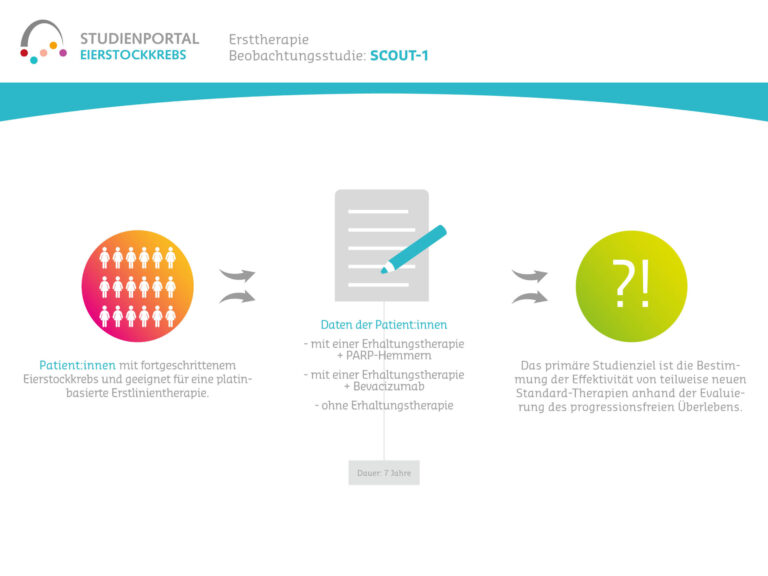
SCOUT-1 is a non-interventional study, a so-called observational study with the aim of collecting clinical and patient-reported data from the daily routine of patients with ovarian cancer. Eligible patients are those who are suitable for platinum-based first-line chemotherapy and for whom BRCA/HRD testing is planned. The observational study will collect data over a period of 7 years, but will not interfere with the course of treatment.

What is being investigated in this study?

The majority of patients with ovarian cancer are diagnosed at an advanced stage. Despite improved results from debulking surgery (removal of the tumor tissue) and a good response to platinum-based first-line chemotherapy, most patients with ovarian cancer suffer a recurrence within two years. (Source: S3 guideline Diagnostics, therapy and aftercare of malignant ovarian tumors, as of May 2022: Guideline program)

In the last two years, new treatment options have been researched, particularly in follow-up care, and expanded to include the concept of maintenance therapy. This has improved progression-free survival (i.e. the time between participation in a trial and disease progression). For example, the effectiveness of PARP inhibitors has been proven in advanced ovarian cancer and BRCA mutations. PARP inhibitors disrupt the DNA repair of cancer cells and thus activate the natural self-destruction program. A BRCA mutation is altered genetic material that can promote cancer. Studies have also shown that PARP inhibitors are effective in patients without a BRCA mutation.

Based on these new findings, a strong recommendation was made for the use of PARP inhibitors in first-line maintenance therapy. This extension of the approval of PARP inhibitors may influence diagnostic and therapeutic measures, follow-up care and patients’ perceptions and needs in everyday care. Most of these aspects will be observed in the study.

What is the aim of the study?

The primary objective of the study is to document data on disease progression and treatment of newly diagnosed advanced ovarian cancer. These data are collected during routine treatment. The aim is to determine the effectiveness of some new standard therapies by evaluating progression-free survival.

This observational study will also provide new insights into the treatment patterns and outcomes of patients with ovarian cancer under everyday conditions in Germany. The focus is on the effectiveness, expectations and needs of patients, molecular test procedures, selection criteria and tolerability of standard treatment sequences. Patient questionnaires, which patients fill out themselves on their state of health and quality of life, are intended to better understand the influence of the disease and treatment over the course of the disease.

What is the procedure for the study?

Patients are observed for up to seven years. During routine visits to the doctor, data on the patient’s medical history and current therapy is documented and some of this data is transferred to the study database. Therapy data collected in the years following the first-line therapy will also be transferred. Participation in the study does not result in any additional visits to the doctor. The quality of life and preference data are recorded electronically by the patients themselves using a questionnaire, so a smartphone, tablet or computer is required for participation.

Are there any risks?

In the SCOUT-1 observational study, there are no additional medical risks outside of routine care. There are confidentiality risks associated with any collection, storage, use and transmission of data. These risks cannot be completely ruled out and increase the more data can be linked together. The sponsor of the study does everything possible to protect the study data according to the state of the art.

Conditions of participation

Women aged 18 and over can take part in this study:

  • with newly diagnosed advanced ovarian cancer
  • suitable for platinum-based first-line therapy
  • with a completed or planned BRCA/HRD test

However, there are also other criteria that must be met in order to participate in the study. Interested patients should speak to the investigators at a study center, who can check whether this study is suitable for them.

Where can I take part in the study?

This study is supported by:

N-PLUS

NOGGO ov53/ ENGOT-ov62 - N-Plus

The world’s first study with the aim of reducing the number of chemotherapy cycles and thus the duration of chemotherapy in patients who have undergone tumor-free surgery. N-Plus is a study for HRD-positive patients undergoing initial therapy for advanced ovarian cancer.

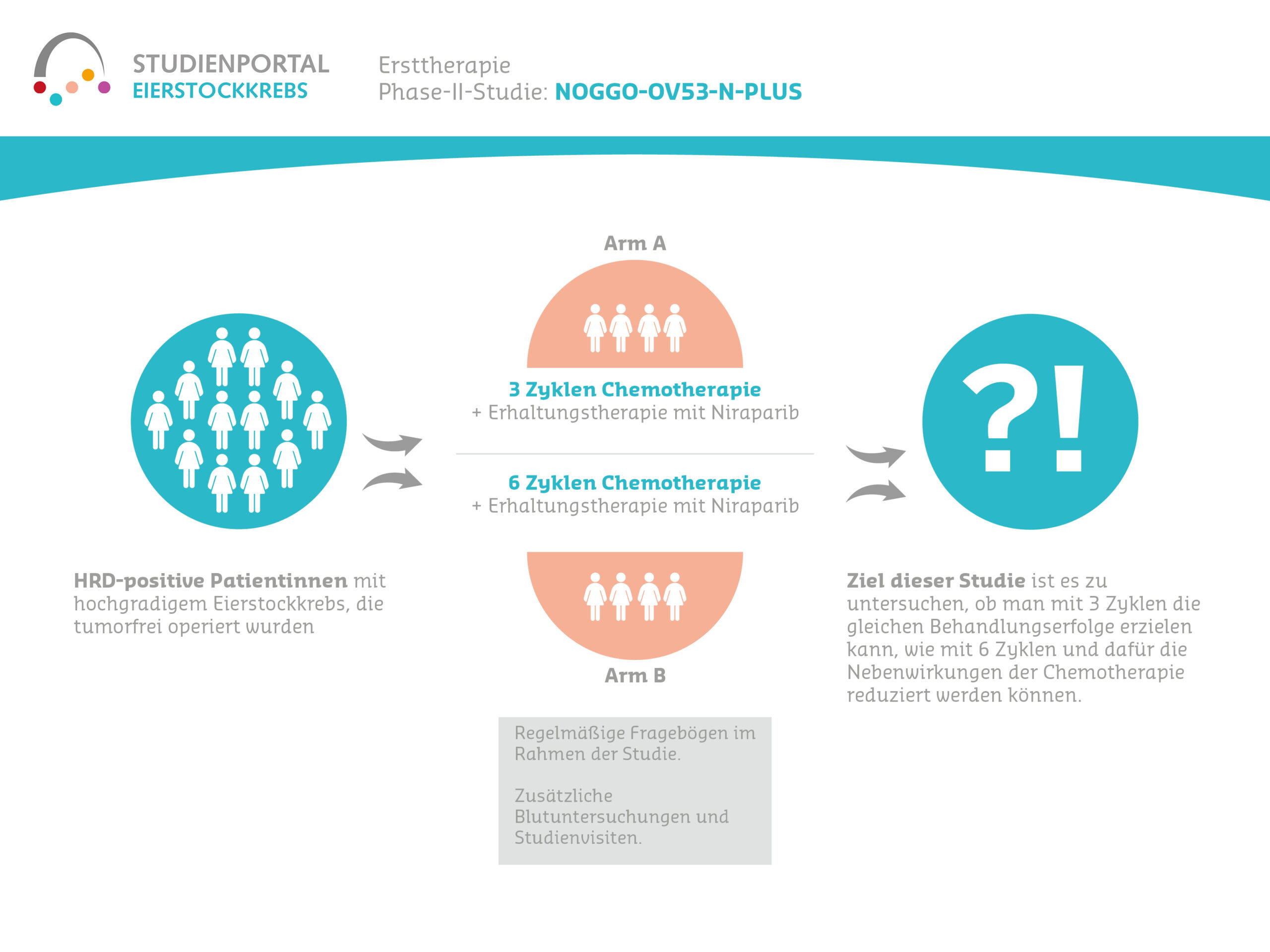
N-PLUS is a randomized (random assignment to treatment arms), non-blinded (all parties know who gets what) phase II study of the non-inferiority of niraparib after 3 vs. 6 cycles of platinum-based chemotherapy in tumor-free patients with advanced, high-grade HRD positive ovarian cancer in first-line therapy.

What is being investigated in this study?

Until now, it has been standard practice for women to be treated with 6 cycles of chemotherapy after being diagnosed with cancer. Chemotherapy is usually associated with side effects that can be severe and can even lead to patients discontinuing treatment. There is evidence from past studies that fewer cycles of chemotherapy followed by treatment with a PARP inhibitor such as niraparib are no less effective than treatment with more cycles – but the chance of having fewer side effects is probably higher.

What is the aim of the study?

The aim of this study is to show that the efficacy and safety of three cycles of chemotherapy(carboplatin/paclitaxel) followed by maintenance therapy with niraparib in patients with high-grade ovarian cancer who have undergone macroscopic tumor-free surgery is not inferior to the effect of 6 cycles of chemotherapy plus subsequent maintenance therapy with niraparib. The question is therefore whether the same treatment success can be achieved with 3 cycles as with 6 cycles and whether the side effects can be reduced by the chemotherapy.

What is the procedure for the study?

Patients are randomly assigned (1:1) to one of the two treatment arms, the probability of receiving 3 cycles or 6 cycles of chemotherapy is the same (50:50). Patients complete two 15-minute questionnaires as part of this study, and there are also additional blood tests and study visits. After chemotherapy, niraparib is administered until the cancer worsens or for a maximum of 3 years. The tablets are taken daily.

Are there any risks?

You will be informed about possible risks and side effects associated with participation during an information session.

Participation requirements

Women aged 18 and over can take part in this study, with:

– HRD-positive, high-grade, advanced ovarian, fallopian tube or primary peritoneal carcinoma
– Stage III or IV
– Complete surgical resection

However, there are also other criteria that must be met in order to participate in the study. Interested patients should speak to the investigators at a study center, who can check whether this study is suitable for them.

Where can I take part in the study?

NOGGO S15 – FraStROC

NOGGO S15 - FraStROC

Study for patients with recurrent or relapsed ovarian cancer.

SP_Graphic_Frastroc_new-scaled

STUDY FOR PATIENTS WITH RECURRENT OR RELAPSED OVARIAN CANCER

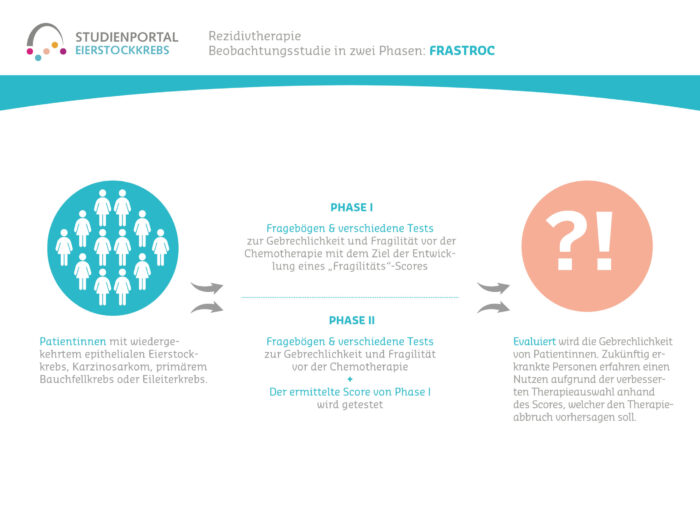
The FraStROC study is a non-interventional, prospective, multicenter observational study in which the frailty and fragility of ovarian cancer patients in the recurrence situation during chemotherapy is evaluated. The study is being conducted in two phases.

What is the aim of the study?
The aim of the study is to prospectively evaluate inflammatory markers, organ dysfunction, functional tests and geriatric assessment measures and patient-reported outcome for their ability to predict hematologic toxicity or non-hematologic toxicity.

What is the procedure for the study?
This is a prospective, multicenter, non-interventional, observational study in 2 stages for patients with epithelial ovarian cancer or carcinosarcoma (EOC), fallopian tube cancer (FTC) or primary peritoneal cancer (PPC) who require monotherapy for recurrent disease and have participated in at least one prior systemic treatment.

Steps 1 and 2:
In the study, demographic, clinical and pathological aspects of the patients are assessed, the measures taken before the start of chemotherapy are documented and an assessment of toxicity is carried out for one year from the start of treatment (follow-up).
In the first step of the study, a frailty score is to be determined on the basis of the data collected in order to estimate the probability that chemotherapy will have to be discontinued due to side effects. In the second step of the study, the calculated score will be tested (validated).

Are there any risks?
No, it is an observational study.


PARTICIPATION REQUIREMENTS

Can I take part in this study?
Most important inclusion and exclusion criteria:

Patients must submit a written declaration of consent in advance and be at least 18 years old:

  • have a histologically confirmed diagnosis of epithelial ovarian cancer, carcinosarcoma, primary peritoneal cancer or fallopian tube cancer
  • have a recurring cancer
  • are eligible for monochemotherapy with paclitaxel, doxorubicin (PLD), topotecan or treosulfan with optional use of bevacizumab
  • have received at least one previous treatment regimen for ovarian cancer (permitted from the second line of treatment)
  • have a life expectancy of at least 12 weeks.

Ineligible patients:
Patients are excluded if:

  • they are only eligible for combination chemotherapy or maintenance therapy after previous chemotherapy or radiotherapy is planned.

In addition, there are further criteria that must be met. Interested patients should speak to an investigator at a study center who can check whether they are eligible for this study.

ARE YOU INTERESTED IN THE STUDY?
Please contact your medical team (gynecologist or oncologist) with this PDF. They will check whether the study is suitable for you and refer you to a study center.